Insurance is one of those words you hear all the time, but it often feels abstract until you actually need it. At its heart, insurance is about protection. You pay a small amount (a premium) so that if something goes wrong, you don’t have to face the full financial hit alone. It’s like pitching in for a group safety net. Everyone contributes a little, and those who end up needing help can draw from the collective pool.
Take car insurance for example. You might pay a few hundred dollars every six months, and most of the time, you don’t use it. But if you’re in an accident, suddenly that coverage kicks in to pay for repairs, medical bills, or even a replacement car. Without it, you’d be scrambling to come up with thousands of dollars on your own. Health insurance works the same way for doctor visits and hospital stays, and renter’s insurance covers your belongings in case of a fire, theft, or flood. Insurance doesn’t erase risk—it spreads it out so that no single person has to shoulder the entire burden.
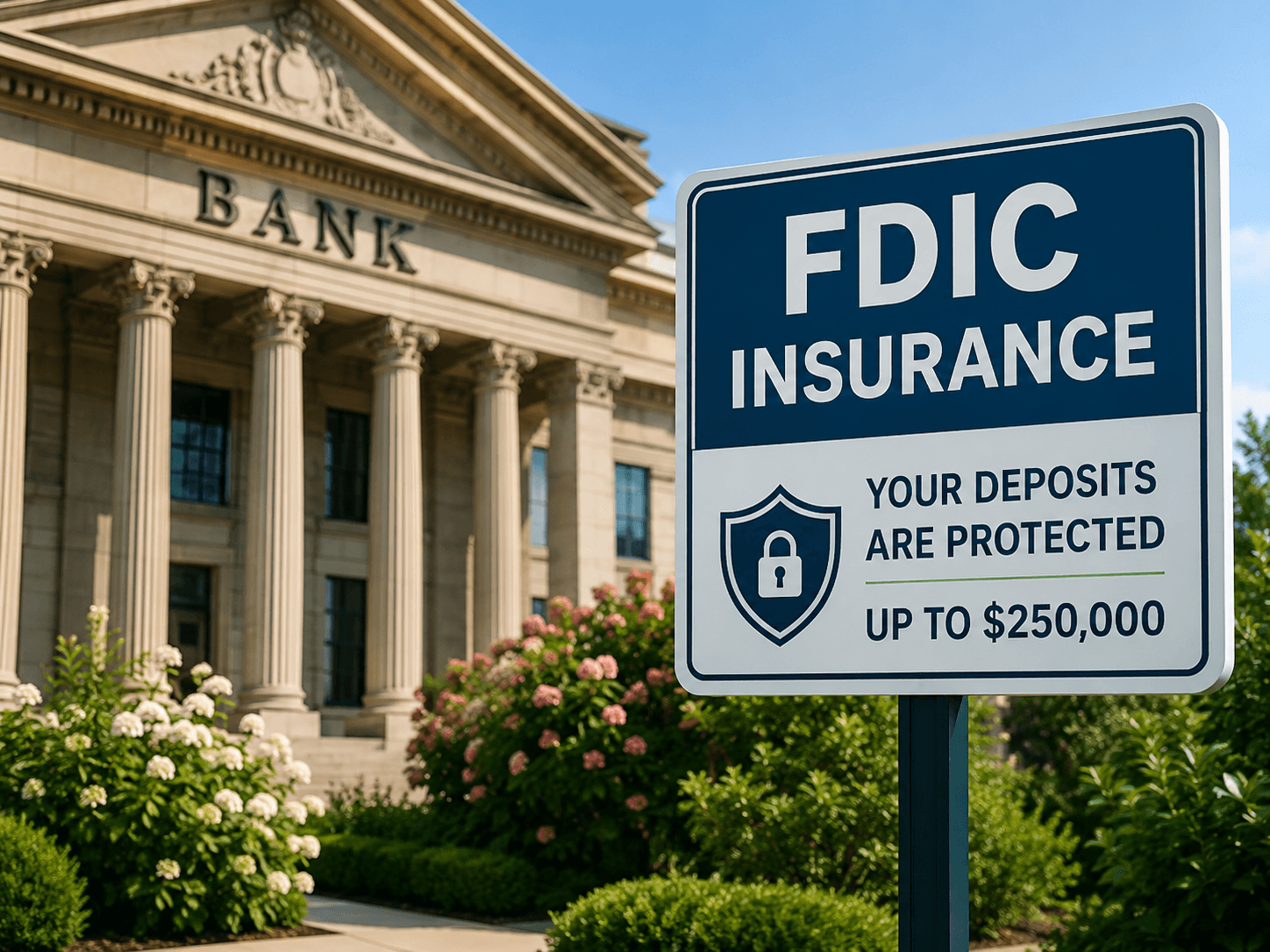
So which insurance is most relevant to your finances? FDIC, or Federal Deposit Insurance Corporation insurance, comes from a government agency created during the Great Depression. During this time, thousands of banks failed and people lost their savings overnight. The FDIC was designed to restore trust by protecting your bank savings the same way other companies may protect your car or house. Its promise is simple: if your bank fails, the federal government will step in and make sure you don’t lose all of your money.
Of course, there’s a limit: $250,000 per depositor, per bank, per account category. If you have both a checking account and a savings account at the same FDIC-insured bank, both are protected up to $250,000. If there’s more than that in either account, you can spread your money across different banks to make sure all of it is covered. Luckily, the FDIC has never failed to pay out if things go wrong: since 1933, no depositor has ever lost a single cent of insured funds.
However, FDIC insurance doesn’t cover everything, only your money stored in your accounts. While it protects checking accounts, savings accounts, money market deposit accounts, and certificates of deposit (CDs), it does not cover investments like stocks, bonds, mutual funds, or crypto—even if you bought them through your bank. The guarantee is about your deposits, not the ups and downs of the market.
In short, FDIC insurance is peace of mind. It’s the quiet reassurance that even if your bank shuts its doors tomorrow, your money won’t disappear. Just like health insurance makes sure a hospital visit doesn’t bankrupt you, FDIC insurance makes sure a bank failure doesn’t wipe out your savings. It’s one of the least flashy, most important protections in personal finance, the invisible shield guarding your hard-earned cash.