Imagine you’re walking down the street on a sunny afternoon and someone nearby lights up a cigarette. You don’t smoke, but now you’re breathing in secondhand smoke. You didn’t buy the cigarette, didn’t agree to inhale it, but you’re paying part of the price. That’s an externality in action, where the choices of one person spill over and affect others who weren’t part of the decision.
Economists use the term externality to describe the hidden side effects of economic activity. These can be negative, like pollution, or positive, like a neighbor’s beautiful garden that everyone on the block enjoys without having to water or weed themselves. What makes externalities tricky is that they aren’t included in the price of the product or service. The smoker pays for the cigarette, but not for the health costs to bystanders. The gardener pays for the seeds and tools, but the whole neighborhood benefits from the view.
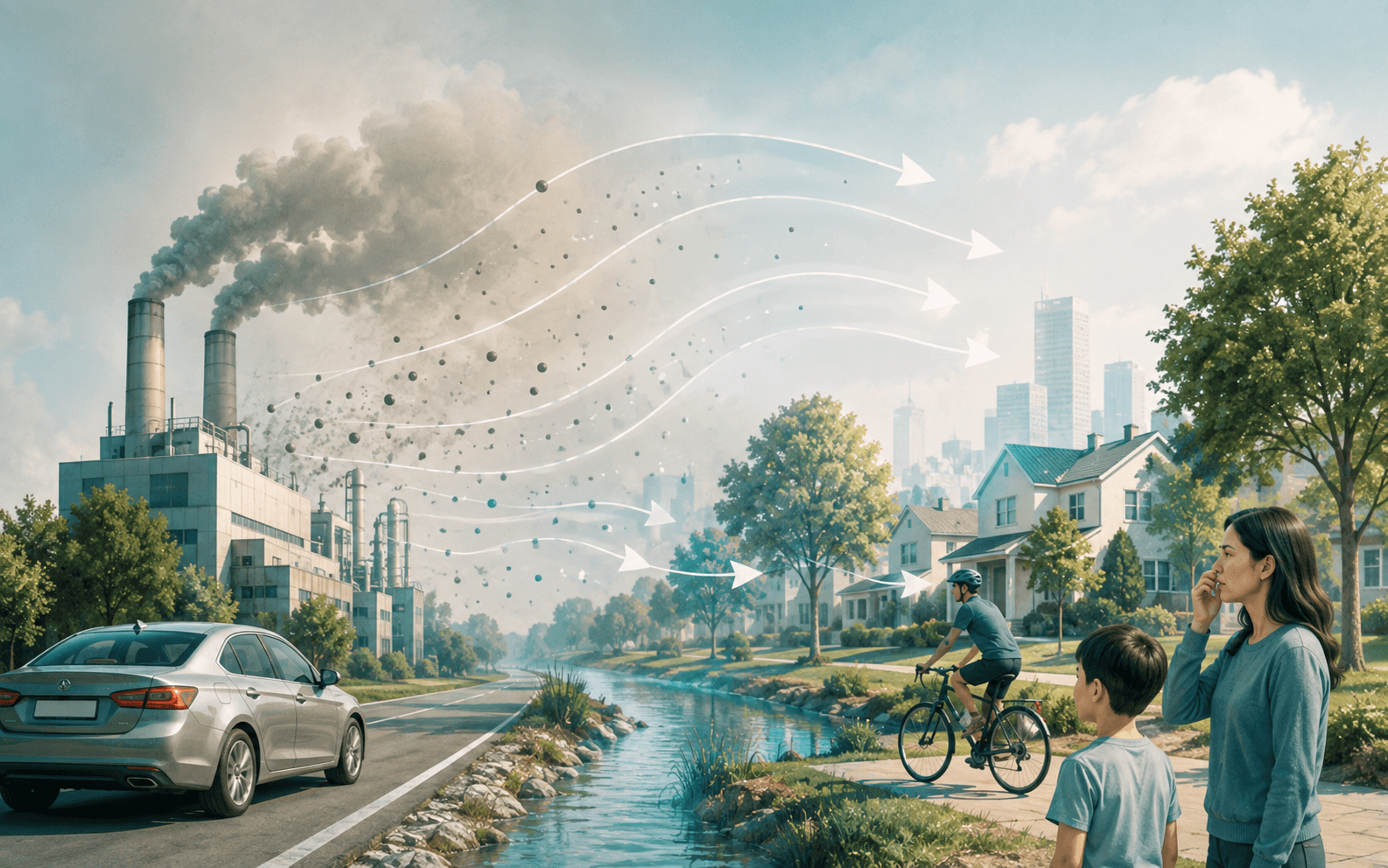
Negative externalities are probably the most obvious, as they often include health detriments to other individuals. Factories that dump waste into rivers make their products cheaper because they’re not paying to clean up the damage. But the local community ends up with dirty water and higher healthcare bills. Similarly, traffic congestion is an externality of driving; each driver thinks only about their own trip, not about the time they’re costing everyone else stuck in the jam. These hidden costs often cause society to end up paying more than what market prices reflect.
Positive externalities work in the opposite direction. Vaccines are a common example. When you get vaccinated, you may initially be thinking about protecting yourself, but vaccination can also reduce the chances of spreading disease to others. Your choice creates a ripple effect of health benefits that go beyond what you directly paid for. Education works the same way: when you go to school, you improve your own earning potential, but you also make society more productive, innovative, and informed. Still, positive externalities have their own catch: the free rider problem. If everyone benefits from something whether they pay for it or not, many may choose not to contribute and instead free ride off the efforts of others. Public goods like clean air, streetlights, or national defense face this issue—everyone enjoys them, but individuals may have little incentive to pay on their own.
Governments step in to correct externalities because markets alone don’t always account for them. Taxes on cigarettes and carbon emissions are meant to discourage activities with harmful side effects, while subsidies for renewable energy or public education encourage choices that help society. In a way, policy acts like a referee, trying to make sure the costs and benefits are shared more fairly.
At the end of the day, externalities remind us that our choices don’t exist in isolation. Every decision—whether it’s driving, studying, recycling, or even planting flowers—creates ripples that touch others. Some ripples help, some hurt, but few are ever contained to just ourselves. Economics gives us the language to see those hidden costs and benefits, and the challenge is learning how to balance them so the world we share works a little better for everyone.