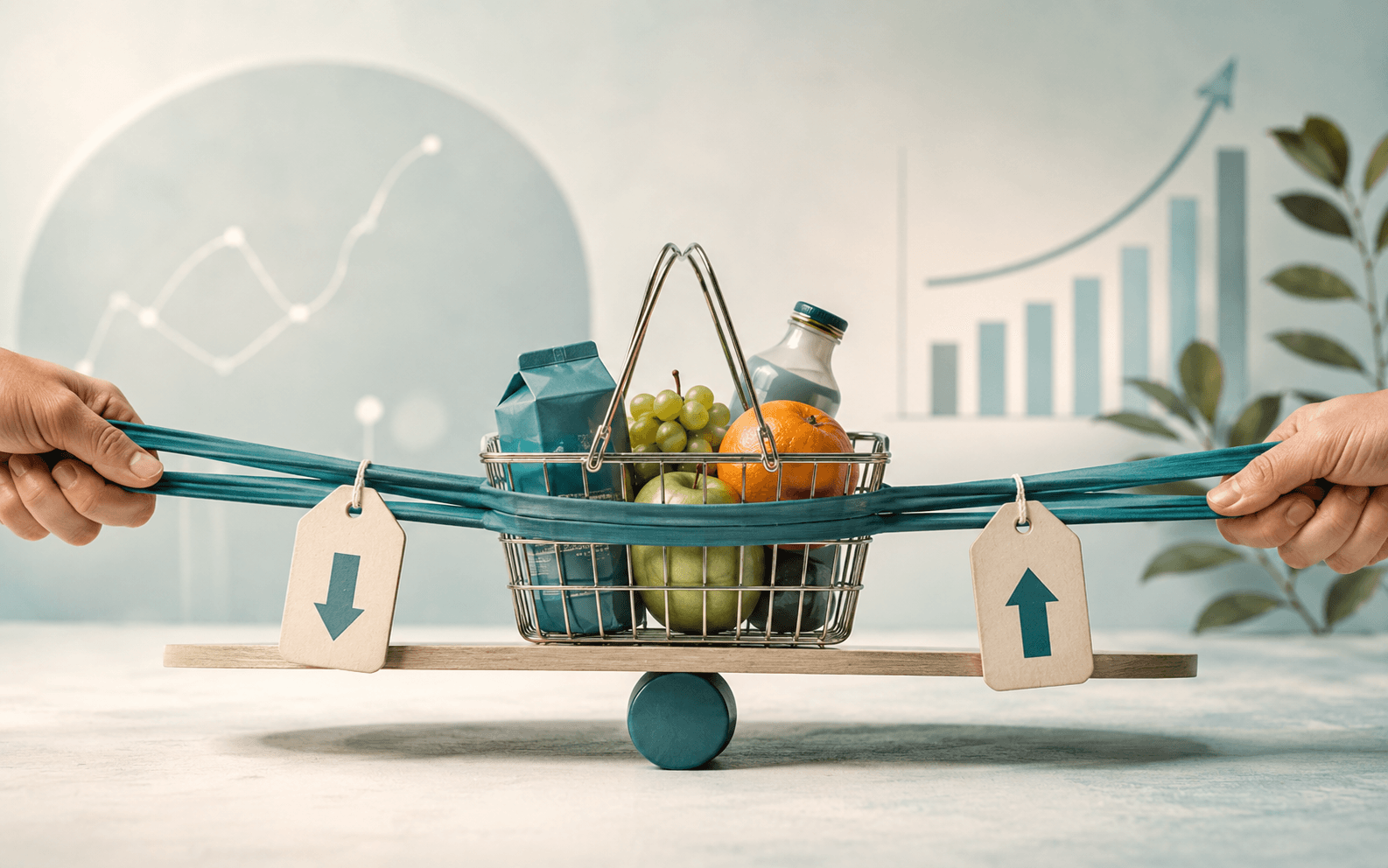
Not long ago, a popular boba shop in town raised the price of its signature brown sugar milk tea from six dollars to eight. Two dollars might not sound like much, but it was just enough to make some customers pause. People stared at the menu a little longer, mentally calculating whether this drink was still worth it. Some decided to cut back on visits, maybe coming every other week instead of every Friday after school. Others didn’t hesitate, ordering as usual, treating the milk tea as a small luxury they weren’t willing to give up. This split in behavior captures one of the most important concepts in economics—elasticity—the measure of how much our buying habits change when prices change.
Elasticity tells us whether demand for something is flexible or stubborn. If a price jump barely dents sales, the product is inelastic; if sales drop sharply, it’s elastic. That difference says a lot about how necessary—or how easily replaced—we think a product is in our lives. In the case of the milk tea, the customers who cut back showed elastic demand, while those who kept buying despite the higher price showed inelastic demand. This same dynamic plays out in countless situations, from essential goods like gasoline to indulgences like designer shoes or concert tickets. Gas prices, for example, can rise sharply without changing how much people drive, because getting to work or school is non-negotiable. But with non-essentials, there’s usually a breaking point where customers start looking for alternatives or walking away entirely.
Businesses think about elasticity constantly, because it shapes how they set prices. Products that are inelastic give companies more room to raise prices without scaring off customers—airfare during the holidays is a perfect example, as most travelers will still go no matter the cost. Elastic products, on the other hand, require more caution, because a price hike can push buyers straight to competitors or convince them to skip the purchase. And it works in the other direction, too: lowering the price of an elastic product can trigger a surge in sales. That $120 jacket you barely noticed last week might suddenly feel irresistible at $60, and stores know it. That’s why big sale events like Black Friday exist—to take advantage of how dramatically demand can respond to a lower price.
What’s interesting is that elasticity isn’t really about the number on the price tag—rather, it’s about perceived value. After the boba shop’s price increase, they introduced a loyalty program: buy five drinks, get one free. Even though the price per cup didn’t change, the new offer made many customers feel like they were getting more for their money, and visits started to climb again. Businesses often use tactics like rewards programs, limited-time deals, or enhanced customer experiences to make products feel less elastic, even if the actual cost stays the same. In other words, they can influence not just the price, but how we respond to it.
Once you start noticing elasticity, it shows up everywhere. It explains why streaming services can raise subscription fees with little pushback, why some concert tickets sell out instantly while others linger for months, and why fast-food chains sometimes shrink portion sizes instead of raising prices outright. In each case, the company is testing how sensitive customers are to change—and adjusting strategy based on the results.
The $8 boba lesson is really a crash course in how the market works. For consumers, understanding elasticity means recognizing why some prices feel fair and others push us to walk away. For businesses, it’s a guide to finding that sweet spot where prices maximize revenue without driving customers off. In the end, prices never exist in isolation—they only matter in the context of how people respond. And whether it’s a cup of milk tea or a plane ticket across the world, that response is what drives the economy forward.