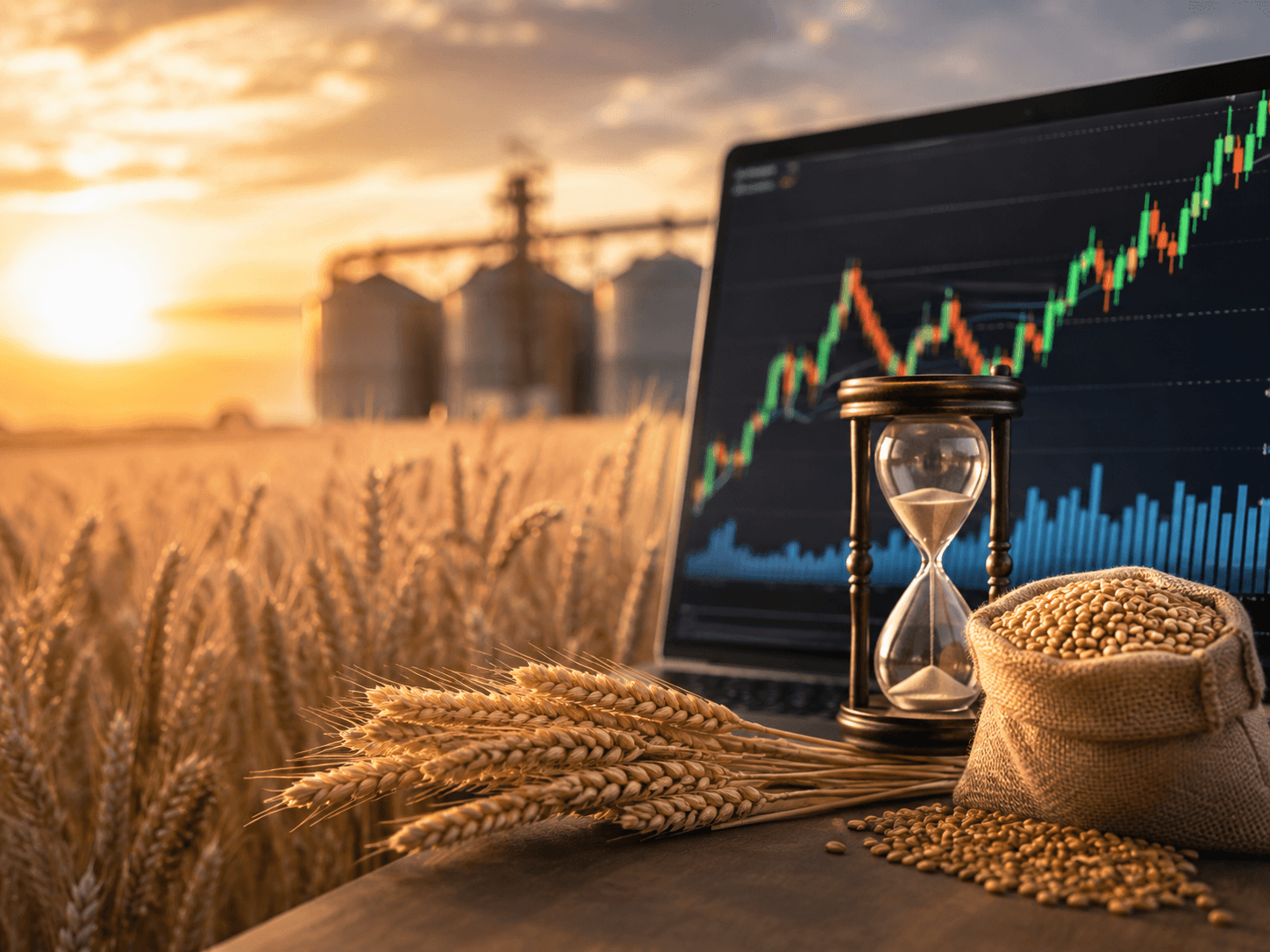
Picture a farmer in the Midwest staring out at acres of wheat swaying in the summer wind. Harvest is only weeks away, but there’s one thing keeping him up at night: the price of wheat could crash before he brings his crop to market. If prices fall too much, all his hard work might barely cover the cost of seeds, fertilizer, and fuel. At the same time, a bakery owner in the city worries about the opposite problem. If wheat prices rise sharply, the flour she buys for bread and pastries will eat into her profits.
To protect themselves, the farmer and the bakery make a deal. Months before the harvest, they agree on a price for the wheat. When the crop comes in, no matter what the market price is—higher or lower—they will trade at that agreed-upon number. This simple arrangement removes uncertainty for both sides. For the farmer, it’s a guarantee that his crop will fetch a fair price. For the bakery, it means flour costs won’t suddenly spike. This deal is what we call a futures contract: a promise made today to buy or sell something at a set price in the future.
Over time, this practice grew from farm fields to trading floors. Futures contracts are now standardized and traded on exchanges, covering not just wheat, but other commodities like oil, gold, stock indexes, and even Bitcoin. While farmers and businesses still use them for protection, investors saw another opportunity: speculation. If you believe wheat prices will rise, you can buy a futures contract now and sell it later for a profit. If you believe prices will fall, you can sell a contract and hope to buy it back cheaper.
But here’s the catch: futures use something called leverage. You only put down a small percentage of the contract’s value at the start, almost like reserving a whole truckload of wheat with just a small deposit. When prices move in your favor, the gains can be huge. When they move against you, the losses can be just as painful—and sometimes bigger than your original investment.
Futures are a balancing act between hedgers and speculators. Farmers, bakeries, airlines, and manufacturers hedge to lock in stable prices and reduce risk. Traders and investors speculate, hoping to profit from price swings. Together, they make the market liquid, with each contract reflecting a tug-of-war between caution and bold bets.
So the next time you read that “wheat futures are climbing” or “oil futures dropped overnight,” think back to that farmer and baker. What started as a handshake deal to stabilize bread prices has become a global system where billions of dollars are traded daily. Futures aren’t about predicting the distant future—they’re about managing uncertainty today, turning tomorrow’s unknowns into numbers we can plan around.