Imagine you’re at a massive music concert. The crowd pulses to the headliners on the main stage. Some sets are breathtaking, others disappointing, but either way, the energy is wild and unpredictable. That’s the stock market—loud, thrilling, and unpredictable. You never know whether you’re going to experience sky-high moments or sudden crashes.
A little farther away, you see people tossing rings, spinning wheels, or trying to win prizes at the side stalls. Those are the options of the investing world—small bets that might earn you a stuffed bear or leave you walking away empty-handed.
But tucked behind the stage is a different kind of experience: the backstage pass. It’s not glamorous in the same way as the front row or as nerve-wracking as the ring toss, but it’s steady and reliable. You flash it, and the security guard waves you through every time. That’s what a bond is—your financial backstage pass.
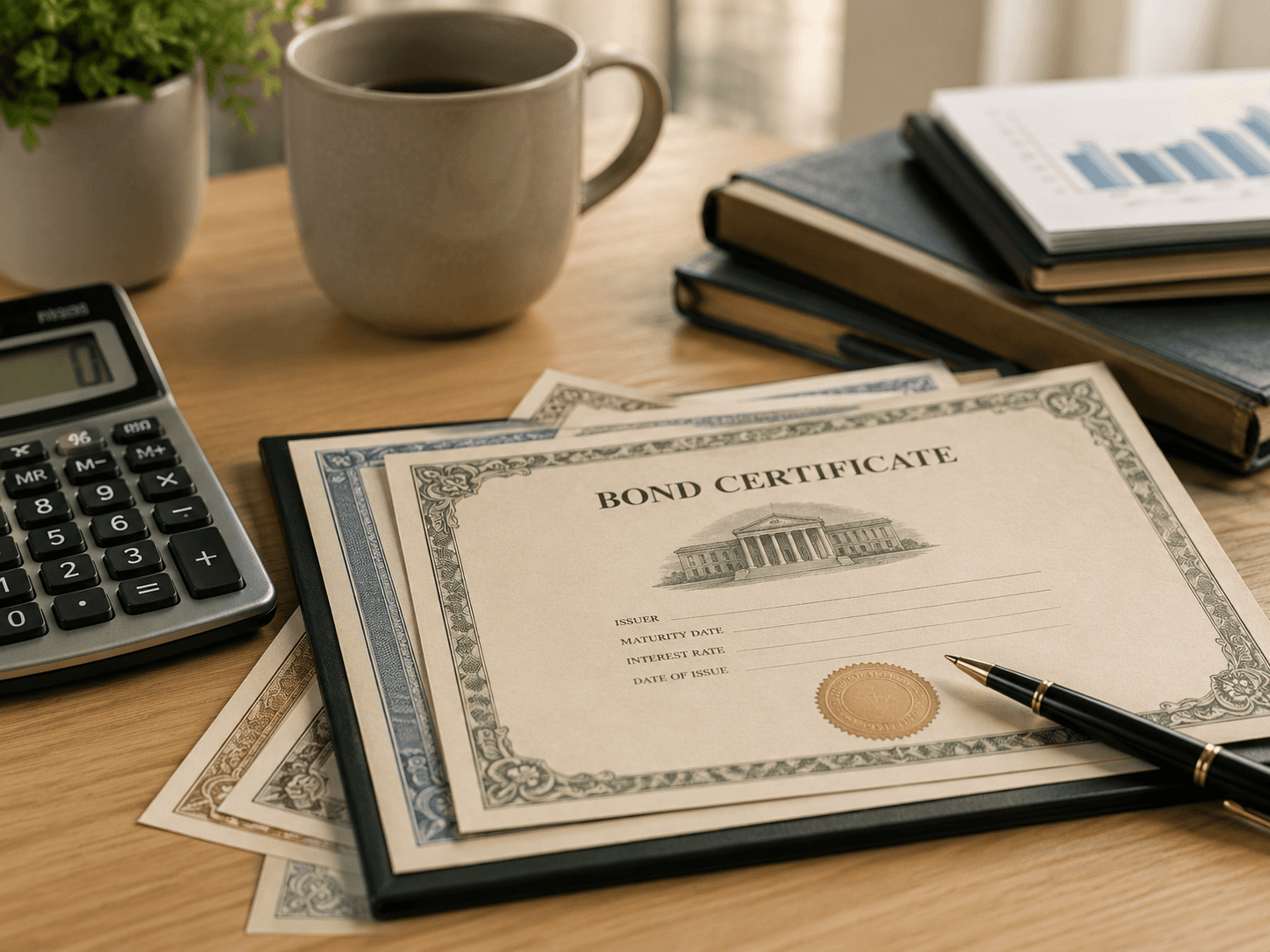
When you buy a bond, you’re lending money to the festival organizers. Maybe it’s the city hosting the event, maybe it’s the company putting it all together. Whoever sells the bond is called the issuer. In exchange, they promise to pay you interest, little benefits along the way, and then return your full payment when the festival ends. The ticket isn’t a gamble; it’s a contract.
The structure is simple, but powerful. Each bond comes with a face value—like the sticker price on your pass. Let’s say it’s $1,000. The bond also carries a coupon rate, which is the yearly interest you earn. At 5%, that means fifty dollars each year, almost like receiving free drinks or perks at regular intervals. Then, on the maturity date, when the festival packs up and the music fades, you hand in your pass and collect the original $1,000 back.
Investors often talk about yield, which is just another way of saying how much return you actually earn on the bond based on its price. If you paid the full $1,000 for the bond, the yield is the same as the coupon rate over the years. But if you managed to buy it cheaper from another fan—say resold at $950—your yield is slightly higher, because you’re getting the same fifty dollars in interest on a smaller upfront cost.
Not all passes are created equal, though. A major festival backed by a big name—think of the U.S. Treasury—carries almost no risk. The perks are smaller, but the access is virtually guaranteed. A newer festival run by a corporate sponsor might offer more perks—higher interest—but with some risk that the event could flop. Then there are the sketchy, late-night warehouse shows—the junk bonds. They dangle the promise of VIP perks, but there’s a real chance the promoter skips town, leaving you locked out.
This is the tradeoff investors weigh: safety versus reward. Bonds from reliable issuers bring calm but modest returns. Riskier ones pay more, but you might not get your money back. It’s not unlike deciding whether to trust the headliner to actually show up or betting your evening on an unknown act that might cancel last minute.
And yet, despite their lack of spotlight, bonds are what keep the festival running. The stages, the lights, the sound systems—none of it comes to life without funding upfront. Bonds provide that foundation, letting organizers secure money today with the promise of repayment tomorrow. In the same way, they fund bridges, schools, businesses, and entire governments.
For investors, bonds serve as balance. Stocks can give you the thrill of the crowd surfing high above the audience. Options can feel like games of chance, tempting but risky. Bonds, though, keep you grounded. They make sure that when the noise fades and the festival ends, you still walk out with your wallet intact and a steady rhythm carrying you forward.
At their core, bonds are just formal IOUs—money you lend, interest you earn, repayment you expect. But through them, whole cities are built, companies expand, and futures are secured. They may not headline the show, but they’re the quiet passes that make the music play on.